Two people argue for two hours and get nowhere. Neither has lied and neither has misquoted. They were reading one sentence two different ways, and nothing in the argument was built to notice.
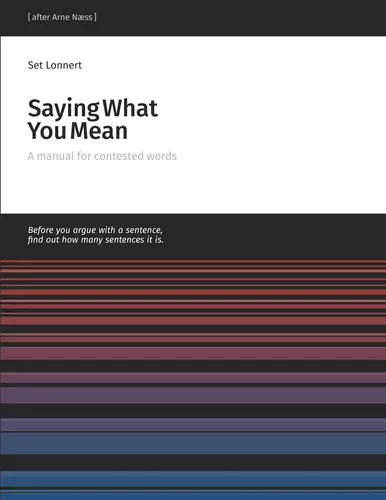
This is a working manual for the moment a word stops being free and starts being a rule -- in a policy, a statute, a platform's terms of service, an accusation. It sets out seven steps for taking a contested sentence apart and nine for the argument it was a premise in; six norms for doing either in good faith, each printed with what it will cost the person who keeps it; five verdicts an argument can honestly end at; and four worked audits of live material, one of which produces nothing and is printed anyway. Seven exercises are answered in full.
It does not ask anyone to speak more precisely. Chapter 7 is the argument against that, and it names who pays.
Set Lonnert has been exploring, teaching, and writing about computers since the early 1980s, publishing on programming, internet technologies, and web development, and spent some ten years studying analytical philosophy. His recent Comfortication asks what human becoming loses when a machine removes the last hard thing. Saying What You Mean puts the two trainings together: an instrument out of the philosophy of language, for disputes that are now settled at machine speed.









Det finns inga presskommentarer tillgängliga just nu.