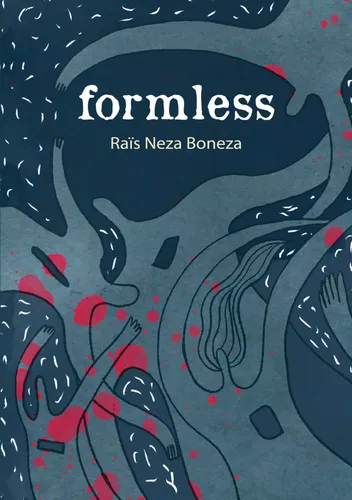
Formless invites us into a shifting landscape where memory, love, history, grief, exile, desire, and hope continually change shape. Its title suggests not an absence of form, but a declaration of freedom. These poems refuse to confine human experience within a single language, geography, emotion, or literary tradition.
Raïs Neza Boneza writes as both witness and wanderer. Here, the intimate and the political cannot be separated. A restless night carries the echo of war; a river becomes an archive of displacement; a butterfly embodies freedom; dawn appears as both a personal awakening and a collective promise.
At the heart of the collection lies a struggle against fragmentation. Boneza confronts racism, colonial violence, poverty, war, forced migration, spiritual alienation, and the machinery of power that turns suffering into abstraction. They search for a language capable of restoring connections; between past and future, body and spirit, Africa and its dispersed children, the wounded self and the possibility of healing. Ancestral memory, myth, prayer, jazz, nature, and everyday observation meet within this search.
The poems move freely between lyrical meditation, protest, dream, manifesto, lament, and love song. Some arrive in brief flashes; others unfold as narratives or incantations. Recurring images of night, dawn, stars, rivers, drums, fire, wind, and journeys form a constellation across the book. Darkness is rarely final. Even where despair speaks most forcefully, a stubborn light remains: the impulse to write, remember, love, and imagine justice.
Ultimately, Formless asks what poetry can preserve when the world is fractured. Its answer is quiet but insistent: memory, dignity, beauty, and the possibility of beginning again. Here, the poem becomes refuge and drumbeat, mirror and vessel, wound and medicine. The reader is invited not merely to observe this transformation, but to enter it.









Det finns inga presskommentarer tillgängliga just nu.